
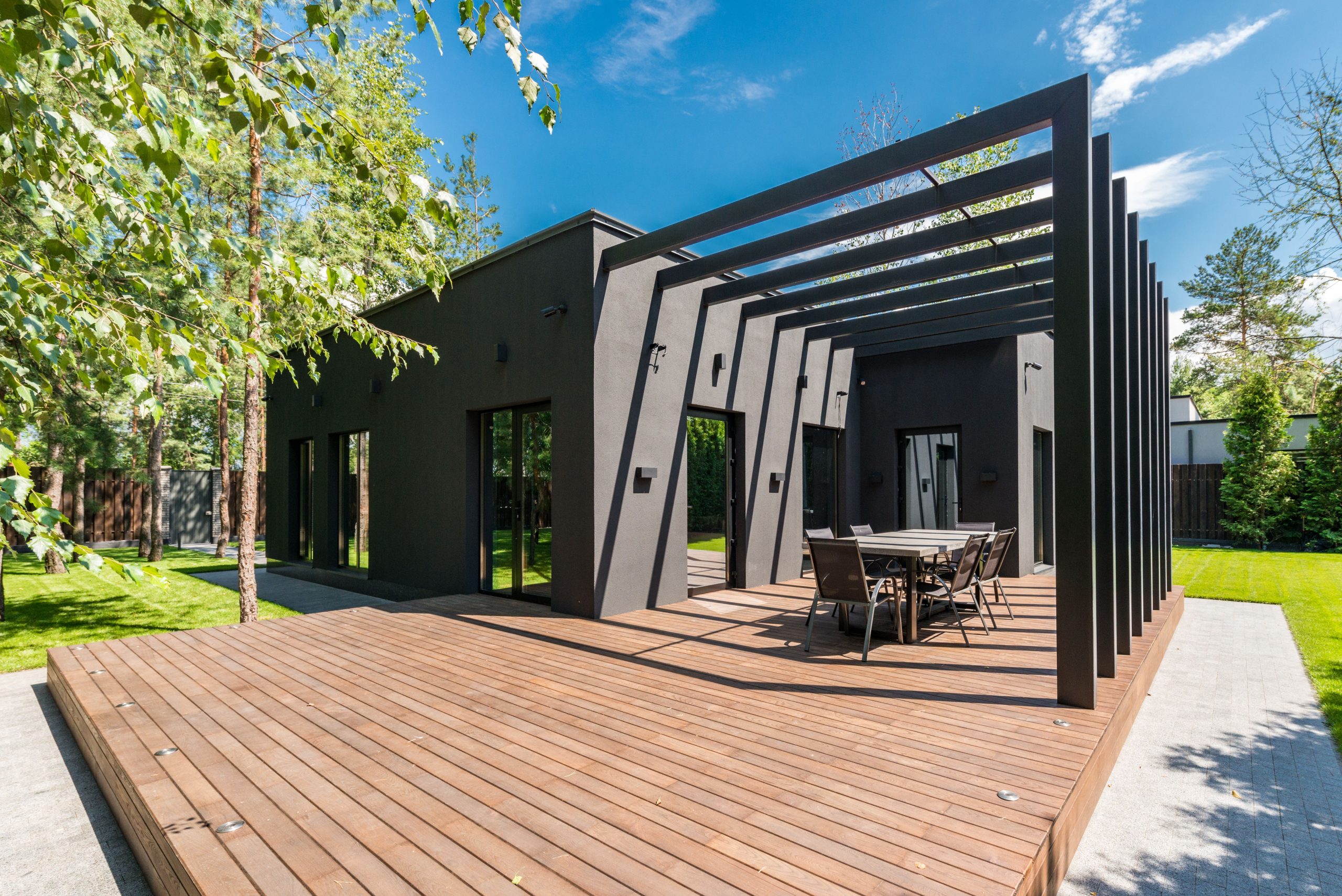
Composite decking is often sold as the sensible alternative to timber: pay more once, then spend less time staining, sanding and replacing boards. That summary is broadly fair, but it leaves out the expensive parts of the project. A composite deck still needs a sound frame, careful installation, drainage, fasteners, stairs and edge details. If the design includes privacy screens or balustrades, those costs sit alongside the decking rather than disappearing into it.
The better question is not simply, “What does composite decking cost per square metre?” It is: what will this deck cost to install, maintain and eventually repair over the years you expect to own it? This guide separates those costs and explains when the premium is justified.
Table of Contents
- The upfront cost: boards are only one line item
- Where installation costs accumulate
- Maintenance is lower, not zero
- How to judge long-term value
- When composite decking is worth the premium
- A practical quote-checking checklist
- Frequently asked questions
The upfront cost: boards are only one line item
As a current US benchmark, Angi’s 2026 pricing guide puts a typical professionally installed composite deck at $5,400 to $11,500, with an average around $8,500. Its estimate for composite materials is $5 to $18 per square foot, while labor adds roughly $10 to $14 per square foot. These are planning figures, not a quote: local wages, access, ground conditions and the product range can move the total substantially.
Trex’s own planning page gives a separate material estimate of $10 to $27 per square foot when its calculation includes the substructure, decking, hardware and fasteners. The difference between those figures is a useful warning. “Material cost” does not mean “cost of the boards,” and different guides may include different parts of the build.
| Cost component | Typical planning figure | Why it changes |
|---|---|---|
| Composite decking material | $5–$18 per sq. ft. | Collection, profile, color, capping and waste |
| Professional labor | $10–$14 per sq. ft. | Region, access, height and design complexity |
| Permits | $225–$500 | Local authority and project scope |
| Demolition of an existing deck | $5–$15 per sq. ft. | Deck height, disposal and site access |
| Railings, substructure, posts and hardware | $3,800–$8,300 for a 360 sq. ft. example | Safety requirements, layout and specification |
Source note: US planning ranges from Angi’s composite-deck cost guide, updated September 2026. Figures are indicative and should be rechecked locally before ordering.

The table’s most important row is the last one. Homeowners commonly compare the price of composite boards with the price of timber boards, then discover that stairs, railings, posts, joist repairs and disposal were never included in the comparison. A small rectangular deck with easy access can be relatively economical. A raised, stepped or irregular deck can make the surface material a much smaller share of the final bill.
Where installation costs accumulate
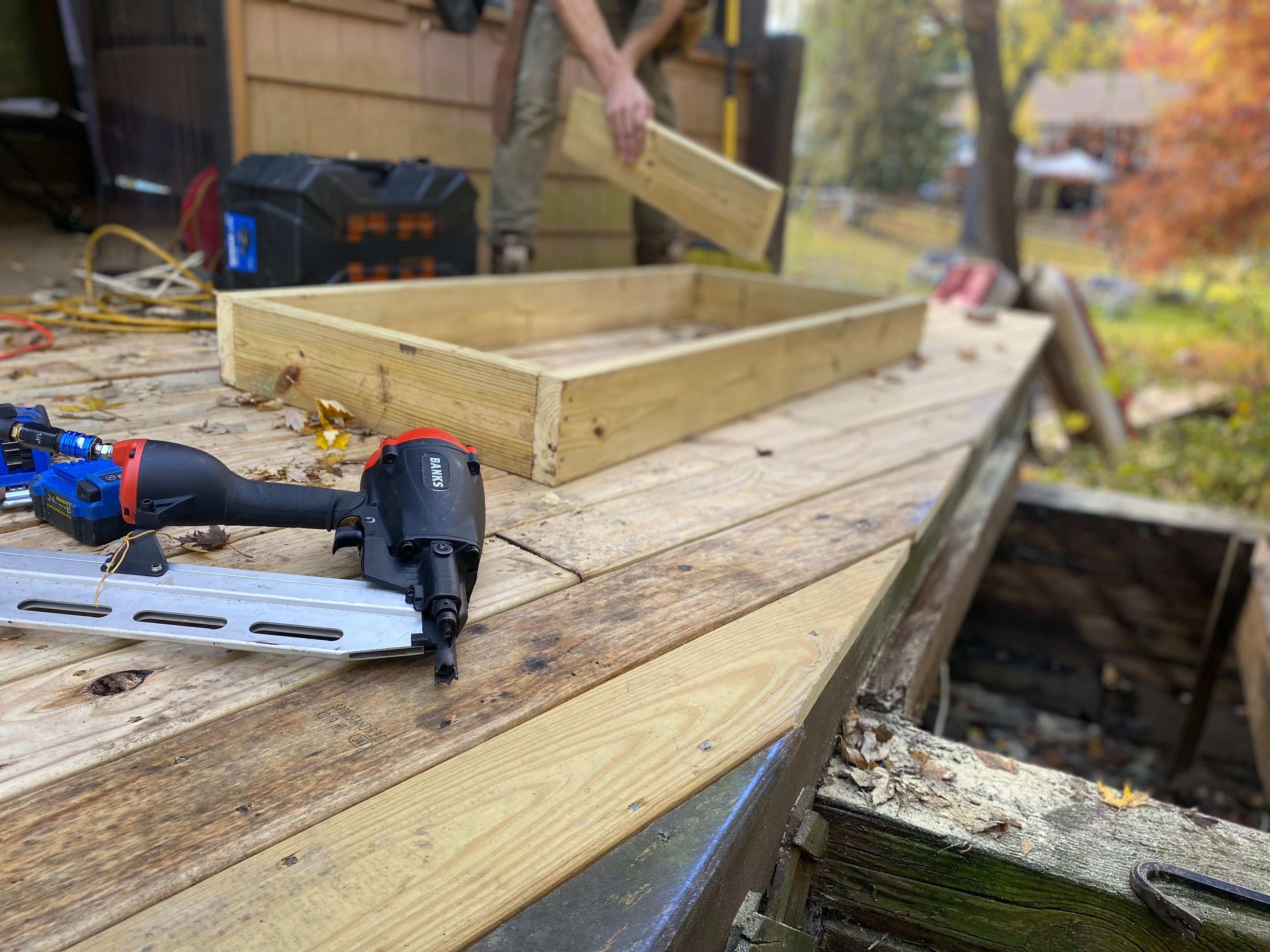
Composite decking is not structural. The boards sit on a substructure made from timber, steel or another approved system, and that structure still has to carry people, furniture and weather loads. Replacing the visible boards while leaving questionable joists underneath can produce a deck that looks new but has an old problem hidden below it.
Installation becomes more expensive when the builder has to:
- Remove and dispose of an existing deck.
- Repair rotten joists, beams, posts or the ledger connection.
- Strengthen the frame to meet the composite manufacturer’s spacing requirements.
- Build stairs, picture-frame borders, diagonal patterns or curved sections.
- Work around difficult access, sloping ground, trees or drainage channels.
- Add railings, lighting, skirting, privacy panels or built-in seating.
Joist spacing deserves particular attention. Composite boards can be less forgiving than timber when the frame flexes, and a manufacturer may specify closer spacing for standard installations or more support for diagonal layouts. Ask for the proposed joist spacing in the written quote, not merely the product name.
There is also a labor tradeoff for DIY installers. Composite boards are heavier than many natural softwood boards, and hidden-fastener systems require a consistent, accurate installation. Consumer Reports’ 2026 decking tests note both the lower maintenance burden and the fact that many composite products are heavier than traditional pine. Saving labor is possible, but the work is not automatically easier.
Maintenance is lower, not zero
The maintenance advantage is real. Composite decking generally does not need the regular staining, sealing or painting associated with timber, and it is resistant to common problems such as splintering, rot and insect damage. That saves both money and the less visible cost of spending a weekend preparing and coating boards.
It still needs routine care. Trex recommends cleaning its newer high-performance decking with warm soapy water and a soft brush, with periodic cleaning often sufficient. Its guidance allows a pressure washer up to 3,100 psi for certain product lines, using a fan tip at least eight inches from the surface. That permission is product-specific, not a universal rule for every composite board.
TimberTech’s cleaning guidance is more conservative for its products, recommending a maximum of 1,500 psi for rinsing, with a fan tip. This disagreement is not a contradiction so much as a reminder to identify the exact board before reaching for a pressure washer. The wrong nozzle, cleaner or distance can mark the surface and may complicate a warranty claim.
A realistic maintenance routine looks like this:
- Sweep leaves, soil and food debris away before they remain trapped between boards.
- Clean at least seasonally, or more often in a shaded, damp or heavily used location.
- Remove grease and food spills promptly rather than assuming the surface is stain-proof.
- Inspect the frame, fasteners, drainage and ledger connection as well as the boards.
- Use only cleaners, brushes and pressure settings approved for the specific product.
The hidden maintenance cost is the substructure. A capped composite board can remain attractive while the timber beneath it is exposed to moisture, poor ventilation or inadequate flashing. The deck surface may be low maintenance; the deck as a whole is not maintenance-free.
How to judge long-term value
Long-term value has at least four parts: the initial price, recurring maintenance, the probability of major repair and how much you value the deck’s appearance and usability. Composite usually performs well on the second category. It does not automatically win on the first, and no warranty can compensate for an incorrectly built frame.
Manufacturers commonly offer long limited warranties, but a warranty is not a promise that nothing will ever need attention. Trex lists residential decking warranties ranging from 25 to 50 years across products, while TimberTech lists 25- to 30-year product and fade-and-stain warranties for its composite collections. Coverage varies by collection and typically depends on correct installation, normal use and compliance with the manufacturer’s care instructions.
Warranty length should therefore be treated as a risk signal rather than a precise life expectancy. It tells you that the manufacturer is willing to stand behind defined performance for a period; it does not value your labor, cover every appearance change or pay for all installation costs if a board must be replaced.
For a simple way to compare options, estimate the ownership cost like this:
Total ownership cost = installation price + planned cleaning and repairs + eventual component replacement − avoided staining, sealing and board-replacement costs.
Do not force false precision into the calculation. A timber deck may require staining every few years, but the exact frequency depends on exposure, product and the owner’s standards. Composite may need only cleaning, but a damaged board, faded color match or failing frame can still create a significant bill. Use a range and compare the assumptions behind each quote.
When composite decking is worth the premium
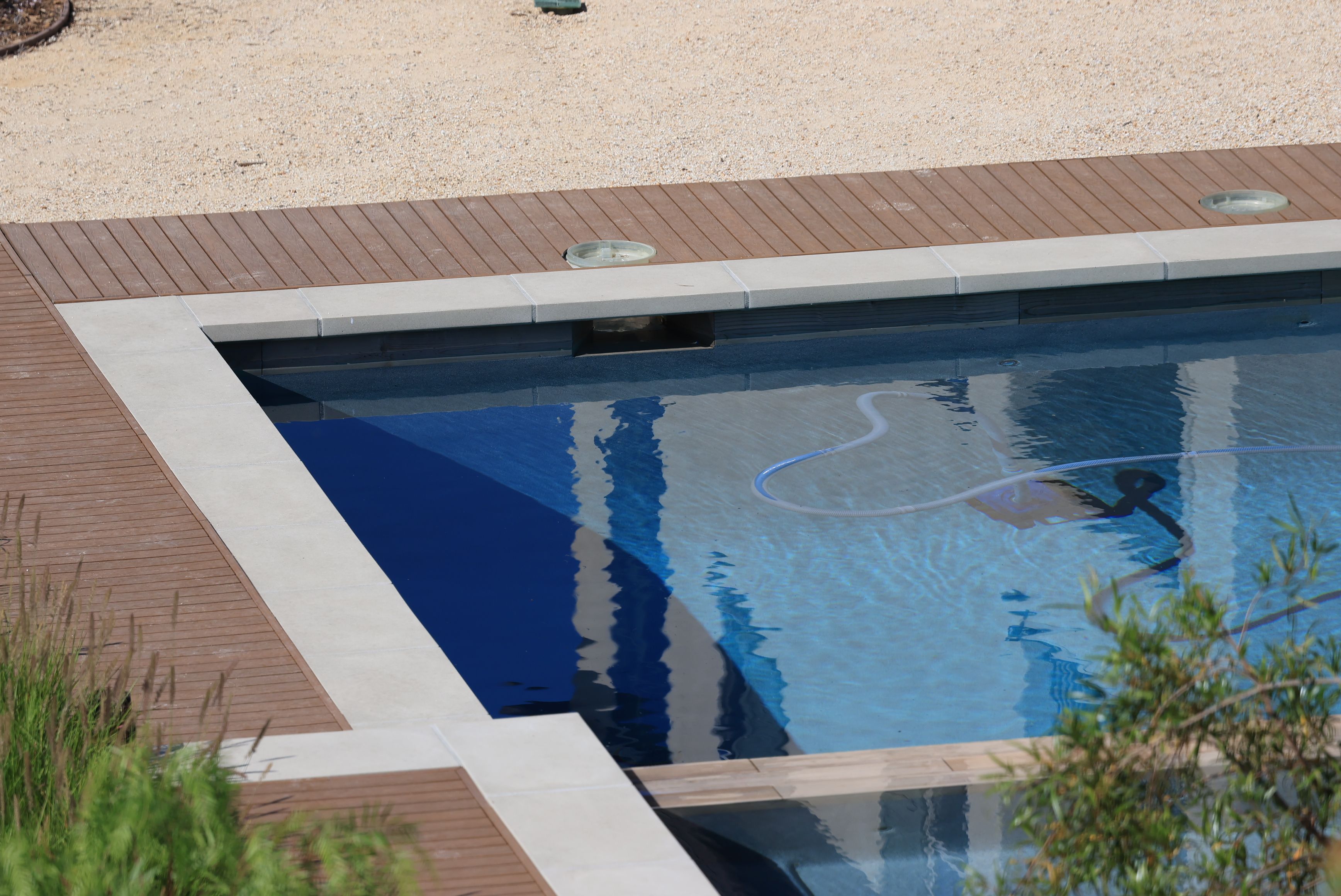
My view is that composite is easiest to justify when the homeowner expects to use the deck for many years and genuinely dislikes recurring surface maintenance. The material premium buys predictable appearance, fewer splinters and less routine finishing work. Those benefits matter more for a busy household, a rental property where maintenance access is limited, or a deck beside a pool where splinters and constant wetting are unwelcome.
It is harder to justify when the project is being done on a tight budget, the design is likely to change soon, or the existing frame needs extensive rebuilding. In those cases, a less expensive surface can leave more money for the structural work that actually determines safety and longevity.
The strongest counterargument comes from the traditional timber camp: timber has a lower entry price, can be repaired or refinished in familiar ways, and offers a material feel that some composite products imitate but do not reproduce. That is a legitimate preference, not ignorance. I would choose timber over composite for a short-term, low-cost project where the owner is happy to maintain it; I would not choose it solely because the board price looks lower.
A practical quote-checking checklist
Before comparing two contractors, make sure they are pricing the same job. Ask each one to identify:
- Decking collection, color, board profile and estimated waste.
- Substructure material, joist spacing, support posts and ground preparation.
- Demolition, disposal, permits and inspections.
- Stairs, fascia, skirting, railings and any privacy or lighting elements.
- Fastener system and whether replacement boards will remain available.
- Drainage, ventilation and protection for the tops of timber joists.
- Labor warranty, manufacturer warranty and exclusions that affect the installation.
- Who is responsible for cleaning, correcting defects and handling warranty paperwork.
Get a sample of the actual board, not only a brochure image. Look at it in direct sun and shade, walk on a display section if possible, and ask how hot it becomes in your local summer conditions. Color, texture and heat response are practical decisions that a spreadsheet cannot settle.
Frequently Asked Questions
1. Is composite decking more expensive than timber?
Yes, composite decking usually costs more upfront than pressure-treated timber, especially when premium boards, hidden fasteners and matching trim are selected. The difference may narrow over time because composite generally avoids routine staining, sealing and many surface-board replacements.
2. How much does a composite deck cost to install?
As a US planning range updated in 2026, a typical professionally installed composite deck may cost about $5,400 to $11,500, while complex or large projects can exceed that range. Local labor, demolition, stairs, railings, permits and substructure repairs are major variables.
3. Does composite decking need maintenance?
Yes. It normally needs sweeping, periodic washing and inspection of the frame and drainage. It generally does not need routine staining or sealing, but the correct cleaning method depends on the manufacturer and product generation.
4. How long does composite decking last?
Many major composite products carry residential limited warranties of roughly 25 to 50 years, depending on the collection. A warranty is not an exact lifespan guarantee; installation quality, the supporting frame, climate and maintenance still affect how long the complete deck remains serviceable.
5. Is composite decking worth the money?
It can be worth the money when you plan to keep the deck for years and place a high value on low surface maintenance, consistent appearance and resistance to rot and splinters. It may not be the best choice when the initial budget is the dominant constraint or when the existing substructure needs expensive repairs.
The number that matters most
The most honest composite-decking quote is not the one with the lowest board price. It is the one that shows what happens underneath the boards, around the edges and after the contractor leaves. Price the frame, the labor, the cleaning routine and the likely repairs together, then decide whether the time saved is worth the premium.
For many homeowners, that is the real value of composite: not a maintenance-free deck, but a deck whose maintenance is more predictable. If the structure is built properly and the product is chosen for the conditions, paying more at the beginning can buy years of use without turning every spring into a refinishing project.